Yet another geek blog
4 January 2013
Embassytown by China Miéville
Embassytown by China Miéville
In Short
A story of mutual incomprehension that becomes a study of language itself.
The Ariekei are an alien race that speak like humans but do not need to learn to speak. The ability is hardwired into their brains. When one hears another, they perceive the meaning in the same way that a human perceives the blueness of a clear sky of the heat of a flame.
This puts the small human settlement on the Ariekei world in a very odd position. They have learned to understand and speak the Ariekei language but they cannot talk to them. When the Ariekei listen to humans (or even recordings of themselves) they only hear a noise. Not only do they not understand their own language, they have no concept of language at all.
Things to Like
Too often in science fiction, aliens are not really very alien and language is treated as a problem that is best ignored. It is wonderful that Miéville confronts both of these things head on and makes them central to the book.
The story is told as an account by the main character, Avice Benner Cho and her voice really adds to the incomprehension. Cho is a hyperspace traveller- something that cannot be described to anybody who has not experienced it. She talks about Ariekei as if talking to somebody who knows what they are like. So all the reader gets is references to the chitinous sounds of their walk or the retraction of their eye-coral. This lack of a proper description maintains their alienness.
This could have been a very dry and cerebral study. Instead there is an ingenious catastrophe that engulfs both races triggered by their lack of mutual understanding.
Things not to Like
Alas, Cho is not a very good story-teller. She gets muddled up, interrupts herself and changed track. This is good for her character, but it occasionally spoils the atmosphere. Particularly when horrible things happen because these are things that the reader is interested in but Cho does not want to talk about.
The plot is also a little simplistic. Nothing much happens at the start so that the reader has the chance to understand this strange world. Then disaster strikes out of the blue and there is a mad scramble to deal with it. The final resolution is ingenious and satisfying, but seems to happen far too quickly.
Things it is like
I honestly do not know what to compare this book to. (A recommendation in itself). However, other Sci-Fi that uses language as a central theme is:
-
The Disposessed
by Ursula LeGuin.
A colony of anarchists create an artificial language with no possessives of way of expressing ownership. -
1984
by George Orwell.
The state controls thinking by removing words. -
Native Tongue
by Suzette Haden Elgin.
Women have their own language to protect themselves. -
Babel-17
by Samuel R Delany.
An artificial language is used as a weapon because learning it produces traitorous thoughts.
Labels: reviews


2 September 2012
Asylum of the Daleks

In Short
This cannot be faulted as s series opener. The daleks are re-introduced as a major power and made to feel dangerous again.Things to Like
This is one of those stories with something for everybody. Long-term fans can play 'spot-the-dalek' and listen out for references to old stories. New fans can just enjoy the story that is pleasingly full of spectacle and mis-direction. There is even soap-style love story.The plot plays nice tricks with audience expectations. The old companions are yanked back in to series against their wills after we presume they are finished with and the new companion character made the subject of a plot twists that go completely against the norm and yet is signalled from the start.
Things not to Like
The asylum planet itself could have done with a little more justification. Daleks have never shown any squeamishness about killing other daleks in the past. Nor do they do so in this storey.Some things were done purely for visual effect rather than believability. For example, dalek agents can now erupt bionic implants. I am the first to admit that these are a million times better that the old 'dalek hats' ( http://media.avclub.com/images/articles/article/79/79710/resurrectionofthedaleks02_jpg_300x1000_q85.jpg ) but it makes no sense. The agents are supposed to be undetectable, not full of metal. How could they work as infiltrators otherwise?
Similarly, the imprisoned break free of their chains. Very dramatic of course, but if they can do that then what possible reason could there have been for chaining them up in the first place?
The 'Doctor who?' gag has also become overused. Perhaps it will be the ‘Bad Wolf’ of this series, but if not then it feels wrong to use it as a joke after the climax of the last series.
Things it is like
- Resurrection of the Daleks
- Revelation of the Daleks
Labels: reviews
19 August 2012
The Long Earth by Terry Pratchett and Stephen Baxter


In Short
A (very) simple machine is suddenly invented that allows travel into parallel universes. An apparently infinite number of uninhabited and unspoilt Earths.
A lot of science fiction has dealt with the problems of things running out, space, oil, food, air etc. But how would we cope with plenty? What if we suddenly had infinite resources?
This is good “old school” science fiction. A single interesting idea is presented and then followed see where it leads.
This is clearest in the plot, which is almost entirely event rather than character driven. It is as if the authors just light the blue-touch paper and stand back. The machine is invented: so what happens then? The poor of the world simply leave: so what happens then? People can use the machine to go around walls and into locked rooms: so what happens then? Colonists do not see the point of paying taxes to another universe: so what happens then?
Things to Like
The sheer scale and grandeur. This is clearly as a 'pilot' novel for an ongoing series or shared story space. It is full of dangling story hooks and unexplored ideas.
I also love the plans for the magic machine. Expect to see them eBay soon.
Things not to like
The plot is stretched very thinly. It is forced to jump between far explorers, colonists and a transformed original world. This does not allow enough room for characters or drama.
I hope that future visits to the Long Earth take the form of self contained stories.
Things it is like
- The Saga of the Exiles by Julian May
- The Number of the Beast by Robert A. Heinlein
- Mostly Harmless by Douglas Adams
Labels: reviews
1 August 2012
My Dear Watson by Margaret Park Bridges
In Short
A female Sherlock Holmes.Things to Like
A simple idea that is immediately engaging. Firstly is lots of humour to be had in the difficulty of maintaining the disguise. Secondly there is some nice exploration of social attitudes to gender. Put simply, a person who is a woman is a woman first and and person second.Holmes and Constance Moriarty are two intelligent and resourceful women who have overcome the challenge in two very different ways. Moriarty has become a simpering vamp who manipulates men to make their power her own. Holmes sidesteps the problem by stepping into a male role.
This seems like a ridiculous idea, but it is worth remembering that this was done in Victorian times (Margaret Ann Bulkley became Dr James Barry), and we will never know how often.
Things not to Like
There is not much Sherlock Holmes here!Holmes’ misogyny and brush with the cross-dressing Irena Adler are touched on but not given the attention that they deserve. Holmes despairing annoyance at how easily Watson is manipulated by Miss Moriarty is engaging enough, but the conviction that she is a murderess is based on nothing more that an instant dislike and prejudice towards the surname. This is not the Holmes we know.
Worst of all is the inevitable return to female dress. There is nothing wrong with the idea that a woman can pass as a women in female clothes. Nor that she would then see a different side to people. But not that Holmes can just disappear by doing this. It is an essential part of the plot that when Holmes puts on a frock and a wig nobody recognises her. These are people who have known Holmes for years, are aware of Holmes’ skill with disguises and are actively looking for the missing detective. None of them looks twice at the tall striking woman with the severe nose who has suddenly appeared on the scene.
Things it is like
Without a Clue is a 1988 film in which Holmes is an actor hired by Watson who is the real investigator.
Without a Clue [DVD]
The Improbable Adventures of Sherlock Holmes by John Joseph Adams is a short story collection with many alternative takes on Holmes.
The Improbable Adventures of Sherlock Holmes

Labels: reviews
16 November 2011
Pavane
by Keith Roberts

In Short
A well crafted alternative history. The religious wars of the 16th Century were decisively won by the Catholic Church who then went on to increase their stranglehold over all aspects of society. We have a 20th Century inhabited by people who feel historical.
Things to Like
The detail is carefully built up to make the world very believable. Each chapter is a self contained story centred on a character from a different level of society. The most striking thing (to us) about this world is the way it has developed. People are allowed to develop existing technologies, but not invent new ones.
For example, they have steam locomotives, because they developed from steam engines. But, with no investment or research there are no railways. The locomotives are owned by private hauliers and run on roads that are directly maintained by the towns. The nearest thing to large companies are the guilds such as the one that maintains the network of semaphore towers but they are not free to do anything new.
Things not to like
The format makes it feel a little fragmented and lacking in overall narrative. Only towards the end to the different threads begin to come together and only at the very end does it ask questions about the nature of history and the way that it works.
Things it is like
- Ruled Britannia by Harry Turtledove (The Spanish Armada is victorious)
- The Warlord of the Air by Michael Moorcock (The British Empire never falls)
- Fatherland by Robert Harris (Hitler wins World War II)
- The Man in the High Castle by Philip K Dick (Ditto)
- Going Postal by Terry Prattchett (Because of the semaphore towers)
Labels: reviews
12 November 2011
The Further Adventures of Sherlock Holmes: War of the Worlds By Manly Wade Wellman , Wade Wellman

In Short
What Sherlock Holmes got up to when the Martians were invading.Things to Like
A better premise for a steampunk novel simply cannot be imagined. Because the world of Sherlock Holmes is so familiar, the reader can experience some of the thrill in its destruction that the original readers of The War of the Worlds must have felt. The lesser known Professor Challenger is also bought into the mix and there is a wonderfully cheeky revelation about Holmes' private life.
Things not to Like
The authors have taken all this potential and done absolutely nothing with it. Separated and alone, Challenger and Holmes simply wonder around following the exact events described in Wells' book and understand them. That is pretty much it.The bombastic and arrogant Challenger should be a joy to write for. But, as he is alone he has nobody to be bombastic and arrogant to. Holmes conducts no experiments, makes no deductions. He just understands what is happening because he is so clever. You would at least expect some sparks when the men are finally bought together, but no. It is just mutual appreciation.
Even the cheeky idea about Homes' private life is handled in the most boring way imaginable. The reader is just told what it is near the beginning of the story.
I suspect that the authors were just too timid to add anything, but in places it feels as if they are actually trying to be dull.
Things it is Like
- The War of the Worlds by HG Wells
- The Adventures of Sherlock Holmes by Arthur Conan Doyle
- Edison's Conquest of Mars by Garrett P Serviss
- War of the Worlds: Global Dispatches by Kevin J Anderson
Labels: reviews
28 September 2011
Anno Dracula by Kim Newman


In Short
Dracula expanded into an alternative history. Overcoming the resistance detailed by Bram Stoker, the Count establishes himself in London and enthrals Victoria. Vampirism spreads unchecked through the aristocracy and then to all levels of society. As Royal Consort, Dracula is effective ruler of an Empire on which the sun will never rise.
Things to Like
Newman creates a pleasingly detailed world but does not let the detail overwhelm the story. He uses the device of mixing familiar fictional characters together with actual history. (This technique was first popularised by Philip José Farmer and later taken to extreme by Alan Moore in The League of Extraordinary Gentlemen).
Familiar events, such as the Whitechapel murders and the Indian mutiny, still happen but for different reasons.
There is always some nice social insight to be had from the way that the vampirism exaggerates Victorian society. The expectational nature of the class system is made explicit. And because the ruling classes spend half their time in coffins they literally cannot see the world they rule. The only problem that they are aware of is a lack of obedience which needs to be addressed by placing more vampires into positions of power. Where they will stay forever.
Things not to Like
Another problem is the Diogenese Club. This is the utterly dull and unsociable gentlemen’s club from the Sherlock Holmes stories. This works perfectly as a cover for a secret society and that is how Newman uses it. The problem, is that it is a secret society that absolutely every seems to know about. One of the main characters in the book is known to be an agent of the club even by people who know nothing else about him. It would have been far better to either keep the club in the shadows or used the masons instead.
Another problem is that because vampirism is normalised, it loses most of its horror. There is shock-horror, but very little of the unsettling-horror of the novels that these characters came from.
Things it is Like
- Dracula by Bram Stoker
- The League of Extraordinary Gentleman by Alan Moore
- The Strange Affair of Spring-Heeled Jack by Mark Hodder
Labels: reviews
22 May 2011
The Windup Girl by Paolo Bacigalupi
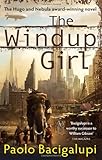
An excellent piece of traditional cyberpunk. (It makes me feel very old saying that).
The structure of the book is pure William Gibson. It follows five characters of different political and social positions whose lives affect each other. This allows a whole world to be detailed very economically.
The novel asks a question that our society is currently unable to face up to: What happens when the oil runs out? Obviously, a horrific drop in population and a shattering of political units as people fought over remaining food supplies. What there is not (as lazier writers often assume) a return to the stone age. This is because science does not disappear, it gets passed on like any other knowledge. Technology does not disappear, there just is not any power to run it. So, there are computers that are powerful enough to analyse a genome but they are powered by sewing machine treadles. LED screens are shocking extravagances and the Internet is unthinkable.
The real villain, as always is human nature. In the book, genetic engineering and capitalism form a toxic mix. Nations wage war on each other by creating plagues that destroy crops and then selling the victims sterile grin. But this is not inevitable. There is a government minister in the book who understands that rebuilding trade links can bring peace and prosperity to the whole world. Meanwhile, a genetic engineer ponders how easy it would be to make humans longer lived and immune to any disease. Interestingly, both of these characters are villains of the story.
The paradox of human nature is reflected in all the characters of the book. They all refuse to give up hope and fight for survival. They just cannot help fighting each other at the same time.
Labels: reviews
1 May 2011
The City & The City by China Miéville

The city and the city have always known about each other because they both occupy the same time and space. They are non-separated along their non-border by something they know only as "The Breach", a mysterious force they both fear and fear to be without.
If Philip K Dick had ever written a mainstream novel, this is what it would be like.
This is not a failing. PDK might have come up with the concept of the superimposed cities, but what China Miéville has done is sustained it and developed it. As the novel progresses, we are shown that the most interesting thing is not the separation of the cities, but the mental state of the separated citizens.
If I or one of my friends were to have a moments failure of unseeing (and who did not do that? who failed to fail to see sometimes?) so long as it was not flaunted or indulged in, we should not be in danger.
To facilitate these every day actions of un-seeing and un-noticing, the citizens and the citizens dress in different colours, speak different languages and even walk and move differently. The mental habits then seep deeply into the citizens minds. We are shown the hippy Unificationists who believe that there is only one city. They see this with reason but are unable to see it with their eyes. Opposing them are the right wing Nationalists. They only want to see one thing but will never understand that this is only possible by having everything else to ignore.
This lays bare the whole concept of nationhood. The fact that it is both real and unreal, natural and artificial.
Labels: reviews
1 April 2011
The Improbable Adventures of Sherlock Holmes by John Joseph Adams


Difficult to give this a score because it is such a mixed bag.
Some stories strive to feel as if they are part on the cannon. Some stores are of the "Sherlock Holmes meets..." variety. Some twist the characters. Some really push the boat out.
They also treat the supernatural differently. There are 'Scooby do' plots where Holmes provides a natural explanation, Lovecraft type ones with true horror and ambiguous ones in which there is no single possible explanation.
Some reviewers clearly dislike this mix because it means that only a few of the stories are ones of the sort they like.
But for me, this is the great strength of the collection. The fact that you have no idea what is coming next keeps it fresh right up to the very end.
Labels: reviews
25 January 2011
Doctor Who: Coming of the Terraphiles by Michael Moorcock

Spot on.
Despite this being his first 'Who', MM immediately nails the 11th incarnation whilst at the same time making the 'Who' universe his own.
The Terraphiles themselves are wonderfully Wodehouse-ian. And there is a Universe-in-danger plot which is handled far better here than on screen.
Labels: reviews
20 December 2010
And Another Thing... (Hitchhiker's Guide, #6) by Eoin Colfer

Panic Now, The Guide is back!
This is a very enjoyable read and it was great fun to be plunged back into Adams' world. The characterisation of Arthur is a bit ropey but Ford and Zaphod leap off the page like old friends. Colfer shows that he knows his stuff by tentative linking to different Guide continuities and even to Dirk Gently.
Frustratingly though, it is just too careful not to stray from the path. In places it feels like a Douglas Adams tribute. (In a way of course, it is.) With Adams, you never knew where you were going to be on the next page. This book has none of that attitude.
Of course, it is good that Colfer wants to embrace the fans and show that he respects the material he has been given. But I hope that in the next book, he is confident enough to honour the spirit of Douglas Adams by letting his imagination of the leash a little more.
Labels: reviews
1 December 2010
The Strange Affair of Spring Heeled Jack (Burton & Swinburne, #1) by Mark Hodder

A flawed masterpiece.
I need to start by saying that this is an extremely enjoyable book. A real page turner. The characters are vivid, their world well drawn and the pace of the story never slackens. I look forwards to the next instalment.
But...
But the author seems to have stumbled into Science Fiction without any understanding of science and this frustratingly weakens the book. The re-imagined Victorian era is peppered with utterly random creations - brain transplants, coal powered helicopters, dogs that understand postal addresses - that have had no effect on general society and have not been developed from anything. Indeed, they are just 'invented' as needed by individual scientists. The culmination of this is a character who has had a clockwork 'analytical engine' grafted into his brain to improve his intelligence. This would be a wonderful image in a Lewis Carroll style fantasy or an allegorical story. But seriously asking the reader to consider that a brass-cog desk calculator could be attached to a human brain (let alone that either would be improved by this) undoes too much of the author's good work elsewhere.
Labels: reviews
23 April 2009
Caprica Review

What do you do with a show that everybody likes but nobody watches?
The HBO series The Wire, is now famous as a gritty and shockingly realistic study is the drugs war in the United States.
But when it launched, it was described as a 'cop show'.
The writer, David Simon, says that this was a necessary Trojan Horse
.
The new series Caprica is billed as a 'family drama' a necessary Trojan Horse for science fiction.
Why is this Necessary?
Because 'genre' programs still find it almost impossible to break out into the mainstream.
Battlestar Galactica
In 2004 the pilot for the new Battlestar Galactica emerged in a blaze of glory. It was a little ponderous and it seemed to have more characters than it knew what to do with but it was full of drama and left you wanting more. As a pilot should. But, as the series progressed, it became obvious that it was something special. Nothing stood still and nothing could be taken for granted. The characters were deepened and dissected and forced into situations that destroyed the audiences preconceptions about 'goodies' and 'baddies'. Some of the characters grow and change, some are damaged, and some destroyed. Rewatching the pilot today, it is striking that none of the people are really who we believed them to be.
The fans loved it. Critics loved it. The viewing public watched American Idol and the studio began to get very upset. There were two problems that just would not go away:
- The name of the show is Battlestar Galactica and memories of that old 1970's show just will not die.
- There are space ships in it.
The quality of the show simply could not translate into viewing figures because these two issues prevented people from watching it in the first place. Hence Caprica, the trojan horse.
Is it a good Trojan Horse?
Indeed it is. The colony of Caprica is the state of California. It never looks like California, but it always feels like it.
It the pilot, as much of the plot as possible is focused on the characters from the two families that will be the backbone of the series. (A tried and tested soap formulae). For example, although the families are from different planets (Caprica and Tauron), this fact is only used to give their characters an ethnicity. Capricans tell us that Taurons have a distinctive smell because they eat dirt and father has to explain to his son (who was born on Caprica) why his family changed their Tauron name. So, we never see Tauron and the information we are given about it tells us more about Capricans.
This promises to be a show that people can tune into and not even notice that they are watching science fiction.
But will it give me my Battlestar Galactica fix?
Only time will tell, but indications look good.
The family dynasty structure is well suited to long story arcs with lots of twists. From the start, expectations are ambushed and nothing is as simple as it seems. Rich teenagers from the a posh school are fodder for a terrorist recruiting cell. The scientist grieving the death of his daughter has a day job designing intelligent weapons.
The pilot is also happy to deal head on with the fact that the 'baddies' believe in God while the 'goodies' do not. (The first series of Battlestar Galactica was so squeamish about this that it cut it out.)
The fact that it is a prequel does not rob it of any tension. It is set 50 years before the parent show and all we really know is that there will be a war in 10 years. In fact, it will be interesting to see how this war is dealt with. It is difficult to believe that they a so optimistic as to think that they will reach it a rate of one serial per story year. Will it be a grand finale? Or will they put off doing it at all until ratings flag?
I want more.
Labels: reviews
Contact
Recommended Reading
- Bad Science
www.badscience.net - Evil Mad Scientist Laboratories
www.evilmadscientist.com - Skeptic
www.skeptic.com - Snopes
www.snopes.com - Null Hypothesis
www.null-hypothesis.co.uk
Previous Posts
- Embassytown by China Miéville
- Asylum of the Daleks
- The Long Earth by Terry Pratchett and Stephen Baxter
- My Dear Watson by Margaret Park Bridges
- Pavane by Keith Roberts
- The Further Adventures of Sherlock Holmes: War of ...
- Anno Dracula by Kim Newman
- The Windup Girl by Paolo Bacigalupi
- Some Animals are More Equal Than Others
- The City & The City by China Miéville
Geek Stuff

Subscribe to
Posts [Atom]